On Tuesday, 29 December 1170, four knights murdered Archbishop Thomas Becket at the altar of Canterbury Cathedral. Within three years, the city transformed from a regional ecclesiastical centre into England's premier pilgrimage destination, a status that would define Canterbury for more than three centuries.
The Assassination in the North-West Transept
The murder unfolded in the north-west transept of Canterbury Cathedral, later known as the "Martyrdom." Reginald FitzUrse, Hugh de Morville, William de Tracy, and Richard le Breton confronted Becket after he refused to submit to King Henry II's authority over Church matters.
According to contemporary biographer Edward Grim, who witnessed the attack, Becket declared before the fatal blow: "For the name of Jesus and the protection of the church, I am ready to embrace death." The knights struck off the crown of Becket's skull, and a clerk present scattered the blood and brains across the floor.
The knights had hidden their weapons and armour under cloaks before entering the cathedral. When monks attempted to bolt the doors, Becket reportedly refused, stating: "It is not right to make a fortress out of the house of prayer!"
Rapid Canonisation and Royal Penance
The speed of Becket's elevation to sainthood astonished medieval observers. Pope Alexander III canonised him on 21 February 1173 at St Peter's Church, Segni, less than two years after the murder. This unprecedented haste reflected both the perceived martyrdom and the political dimensions of the case.
King Henry II performed public penance at Becket's tomb on 12 July 1174 during the Revolt of 1173–1174. The four assassins were excommunicated and sentenced to serve as knights in the Holy Lands for fourteen years. Becket's sister Mary was appointed abbess of Barking Abbey in 1173 as further reparation.
Rebuilding for Pilgrims
The influx of pilgrims necessitated substantial architectural changes to Canterbury Cathedral. After a fire destroyed much of the building in September 1174, master-mason William of Sens rebuilt the quire in Gothic style between 1174 and 1180.
The Trinity Chapel was constructed between 1180 and 1184 specifically to house Becket's shrine. A circular chapel beyond, known as the "Corona" or "Becket's Crown," housed relics including the top of his skull. Walter of Coventry described the shrine as "a coffin wonderfully wrought of gold and silver, and marvellously adorned with precious gems."
Becket's remains were moved from the crypt tomb to this ornate shrine on 7 July 1220, the fiftieth jubilee year of his death. Desiderius Erasmus, visiting in 1512–1514, recorded that once the wooden cover was raised, the Prior pointed out each jewel, naming its donor and value in French.
The Economic Engine of Pilgrimage
Pilgrimage transformed Canterbury's economy. The income from visitors largely funded the cathedral's subsequent rebuilding and maintenance. Pilgrims purchased badges depicting Becket, his martyrdom, or his shrine, generating substantial revenue for the cathedral and local traders.
The monastery developed a tiered accommodation system for visitors. Distinguished ecclesiastics and nobility stayed in the prior's lodgings, middle-class visitors in the cellarer's buildings, and poorer pilgrims in the almonry. This infrastructure reflected the broad social reach of Becket's cult.
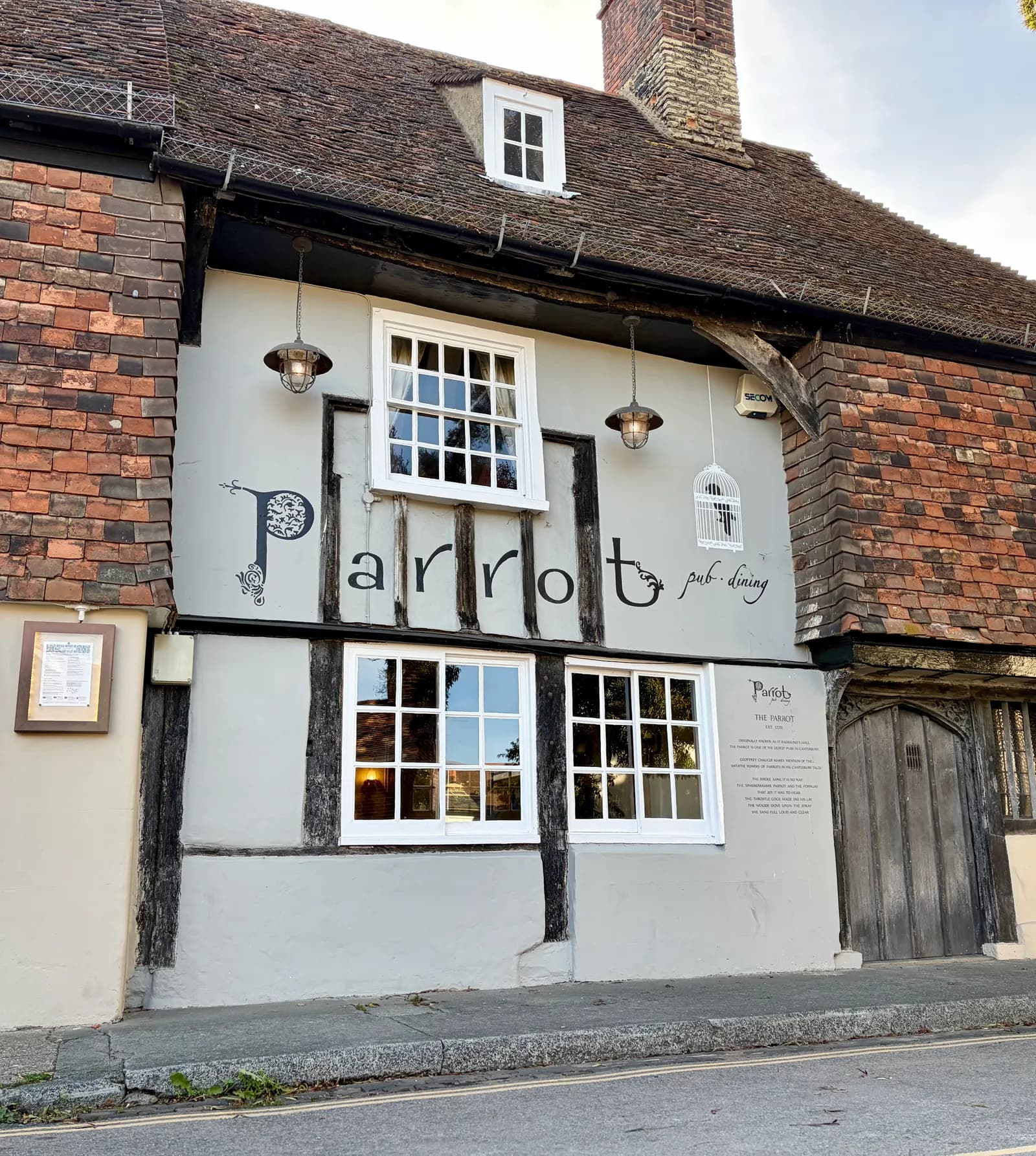
Geoffrey Chaucer's The Canterbury Tales, written circa 1387–1400, captured the pilgrimage phenomenon through its depiction of thirty travellers journeying from London to visit "the holy blissful martyr." The work immortalised the social diversity of medieval pilgrimage, featuring knights, millers, wives, and pardoners united in their devotion.
Notable Visitors and Burials
The shrine attracted royalty and commoners alike. Henry IV was buried at Canterbury Cathedral in 1413, the only English sovereign interred there. Edward the Black Prince was also laid to rest in the Trinity Chapel. These burials underscored the cathedral's elevated status in national life.
The End of an Era
The Dissolution of the Monasteries between 1536 and 1541 under Henry VIII ended Canterbury's pilgrimage tradition. The shrine was destroyed in 1538, its treasures reportedly carried away in two coffers and twenty-six carts. Becket's bones were destroyed, and Henry VIII ordered all mention of his name obliterated.
The Benedictine community at Christ Church Priory was disbanded. The cathedral, previously part of a monastic community, became purely Anglican. Becket's feast day on 29 December and the translation feast on 7 July were suppressed in 1536.
Canterbury Today
Despite the Reformation's systematic erasure, Becket's legacy remains woven into Canterbury's identity. The Martyrdom in the north-west transept still marks where the archbishop fell. The Trinity Chapel, though empty of its shrine, continues to draw visitors.
Canterbury Cathedral became a UNESCO World Heritage Site in 1988, together with St Augustine's Abbey and St Martin's Church. The city now receives approximately one million visitors annually, many drawn by the medieval heritage that Becket's murder set in motion.